Adolescence (ages 12 to 18) is frequently viewed through a lens of stress—often labeled as a turbulent period to simply be endured. However, Dr. Maria Montessori viewed this vital stage with deep respect and optimism.
In a Montessori environment, adolescence is honored as a profound period of transformation that closely mirrors the first six years of life. Just as early childhood is marked by rapid physical construction and the shaping of the individual personality, adolescence marks the construction of the adult self.
The Third Plane: A Time of "Social Rebirth"
Beginning around age twelve and continuing through the teenage years, the Third Plane of Development brings significant physical, emotional, and social shifts. Marked by the onset of puberty, hormonal changes, and rapid growth spurts, this period requires immense energy from the young person.
Dr. Montessori often referred to early adolescents as "social newborns." Just as an infant is vulnerable and learning how to navigate their physical world, the adolescent is a newborn in the social world—learning how to navigate complex human relationships, community dynamics, and their own emerging sense of identity.
Because of this rapid physical and neurological development—including substantial brain rewiring and neural pruning—adolescents have distinct health needs. They require more rest, proper nourishment, and Grace and Courtesy surrounding their physical and emotional well-being.
Our Core Goal: To walk alongside adolescents with calm, steady support—helping them build authentic self-confidence and self-worth while navigating the natural emotional shifts of this stage.
Key Characteristics of the Adolescent Mind & Spirit
To serve the adolescent effectively, we look at the interconnected areas of their growth:
- The Quest for Social and Economic Independence: Adolescents no longer wish to be passive observers of society; they crave real participation. They want to understand how communities function, how economic interdependency works, and how their personal contributions can make a tangible difference.
- A Sensitivity to Justice and Dignity: Young people at this stage possess a deep, passionate sensitivity to issues of fairness, justice, and personal dignity. They are exploring their personal values and seeking to understand their moral role in the wider world.
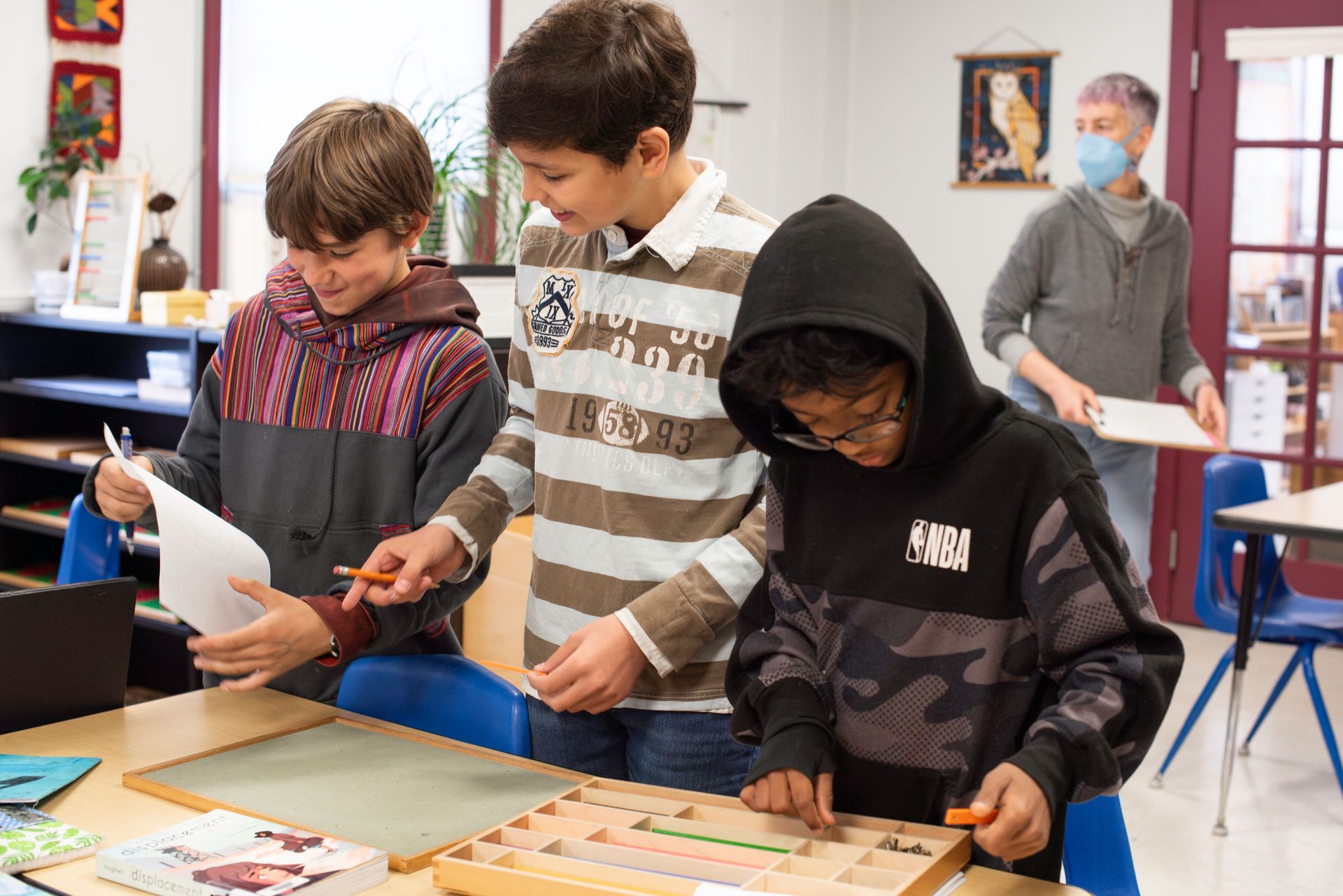
- Learning Through Practical, Real-World Contribution: Just as young children learn through hands-on manipulation of concrete materials, adolescents learn best through real-world work that directly impacts their community.
Supporting the Whole Adolescent: Physical, Emotional, and Social Needs
A Montessori approach to adolescence is deeply holistic. We support the entire human being across three key areas:
1. Physical Development
- What’s happening: Hormonal changes, physical growth, and ongoing brain development influence mood, energy levels, and learning capacity.
- How we support them: By offering purposeful physical activity, hands-on work, opportunities for movement, and an environment that respects their need for adequate sleep and wholesome nutrition.
2. Emotional & Psychological Growth
- What’s happening: Adolescents experience heightened self-consciousness, strong emotional shifts, and a deep search for personal identity.
- How we support them: By providing safe, supportive spaces where they can express themselves, explore their interests, and take healthy intellectual and creative risks without fear of harsh judgment.
3. Social Integration
- What’s happening: Peer relationships take center stage. Adolescents seek connection, loyalty, and validation within their group.
- How we support them: Through collaborative projects, meaningful group work, mentorship from adult guides, and structured opportunities to contribute to the broader school community.
The Role of Meaningful Work and Adult Mentorship
Work remains central to human development at every stage. For adolescents, work builds self-esteem because it provides tangible proof of their capability.
Dr. Montessori envisioned environments where adolescents could engage in practical, land-based work, micro-economy endeavors, and cooperative living. When young people take responsibility for real projects—whether managing a garden, running a small business enterprise, or organizing community service—they develop true self-reliance and an understanding of mutual reliance.
During this stage, the role of adults shifts. Adolescents naturally begin to pull away from their parents as they test their independence, yet they still deeply need safe boundaries, clear structure, and trusted mentors. Our role as guides and parents is not to control, but to walk alongside them—offering steady guidance, mutual respect, and unconditional support.
Partnering with Families at The Renaissance International School
Understanding the third plane of development allows us to reframe how we view our teenagers. Rather than seeing resistance or emotional intensity as problematic, we can recognize these behaviors as natural markers of a human being striving to find their place in the world.
By honoring their physical, emotional, social, and moral growth, we empower our young people to transition into adulthood as confident, compassionate, and capable individuals.
Explore Montessori for Your Family
Whether you are exploring Montessori for your infant, primary child, elementary student, or adolescent, our community is here to support your family's journey.
Schedule a Campus Tour to see our classrooms and community in action.