Proficient reading skills set our children up for success in so many ways. Beyond academic achievement, cultivating a love of joyful reading provides children with a lifelong source of inspiration, discovery, entertainment, and connection.
While our guides introduce the keys to written language and reading within our Montessori classrooms, what happens at home plays an enormous role in shaping a child’s perspective. Here are practical ways you can support your child’s literacy journey and make reading a cherished daily experience.
Read to Your Child: Early, Often, and as Long as They Will Let You
It is never too early to begin reading to your child. Even infants benefit immensely from hearing the rich cadence of spoken language. Listening to spoken words is one of the foundational ways young children begin to process and master speech. Beyond language acquisition, the comforting tone of your voice makes reading together a grounding daily ritual.
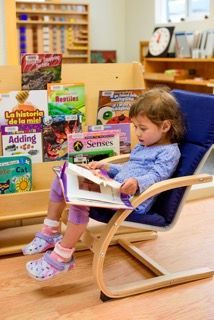
- Infants & Toddlers: Board books are ideal because they allow young children to practice fine motor skills by turning sturdy pages independently without fear of tearing them. Reading at this age helps children associate books with warmth, joy, and comfort.
- Older Children & Preteens: As your child grows, the types of books you explore will evolve, but we encourage families to keep reading aloud together for as long as possible. Even after children achieve full reading independence, having a parent or caregiver read a story aloud remains a deeply comforting and connecting experience.
Be a Reader Yourself, And Let Your Child See You
Children are natural observers. They look to the adults in their lives as models for how to interact with the world.
For many parents, busy schedules make reading for pleasure feel like a luxury. Consider this a note of gentle encouragement: you deserve time to read for yourself. Books enrich our lives, broaden our perspectives, and offer a healthy way to unwind.
Even if it is just for ten minutes a day, carve out time in your routine to pick up a book or magazine. Make sure your child sees you reading. By prioritizing reading in your own life, you subtly demonstrate that literacy is valuable, enjoyable, and an essential part of adulthood.
Celebrate the Diversity of Books and "Follow the Child"
In Montessori, one of our guiding principles is to follow the child, and this applies wonderfully to home reading habits. Your child will naturally develop unique literary preferences, and supporting their choices helps build agency and confidence.
- Embrace Their Interests: Whether your child is captivated by nature guides, fantasy worlds, or humor-filled graphic novels, their enthusiasm is what matters most. While some books may feel lighter than others, any book that makes a child excited to read is a positive step forward. Think of lighter books like a fun treat, it is great to enjoy them alongside a variety of rich, thought-provoking literature.
- Explore New Horizons: Revisit beloved classics from your own childhood, explore current award winners, and introduce stories that reflect diverse perspectives and cultures. The more varied their reading diet, the broader their worldview becomes.
Make Regular Trips to Your Local Library
While owning books is wonderful, children who fall in love with reading can go through books faster than any home bookshelf can handle. Regular library visits allow children to explore an endless world of topics without limitations.
Visiting the library on a fixed day, such as every Saturday morning or Tuesday after school, creates a predictable, joyful routine that children anticipate eagerly. Libraries also offer fantastic community programs, reading challenges, and literacy resources that support the whole family.
Explore Multiple Ways to Enjoy Literature
For reluctant readers, visual learners, or busy families on the go, audiobooks are an exceptional resource. They expand vocabulary, improve comprehension, and make complex stories accessible to all learning styles.
You can easily integrate audiobooks into your family’s routine through:
- Digital Streaming Apps: Platforms like Hoopla, CloudLibrary, or Audible make it easy to listen on road trips or during quiet time at home.
- Library Audio Devices: Many local libraries offer standalone digital audiobook players (like Playaways) or CDs that children can operate independently.
Keep Reading Joyful
Above all, reading should be an experience rooted in joy, curiosity, and comfort. If your child seems resistant or frustrated with reading, step back and give them space. Explore different formats like audiobooks or picture-heavy non-fiction, read aloud to them without expectation, and feel free to reach out to their TRIS guide for personalized insights and advice.
Wishing all of our TRIS families a lifetime of happy reading!