As we help our children learn to navigate the world, we are supporting their journey toward independence. In Montessori education, we often emphasize the importance of self-reliance and practical skills. But did you know that independence isn’t actually the final destination?
Dr. Maria Montessori observed four distinct planes of development, each representing a stage in the human journey toward greater maturity, independence, and ultimately, interdependence. At each stage, children have specific developmental needs, and our approach at The Renaissance International School evolves to meet them.
A core element of our approach is the prepared environment—a carefully designed space that gives children the freedom to move, make choices, and act with purpose. We become who we are through movement and deliberate choice. Independence is not just about being able to complete a task alone; it is about becoming oneself.
Yet, as humans, we don't exist in isolation. In order to live effectively in a community, we must first be able to function independently. Before we can offer meaningful help to others, we must first learn to care for ourselves.
First Plane (Birth to Age 6): The Formation of the Individual
From birth, children begin the vital work of self-construction, adapting to their immediate environment through movement and their senses.
This stage is centered on gaining functional independence. By the end of this period, children can walk, speak, feed themselves, and care for their physical needs. Dr. Montessori referred to this time as the "social embryo"—the moment children begin participating in group life and shaping their sense of self.
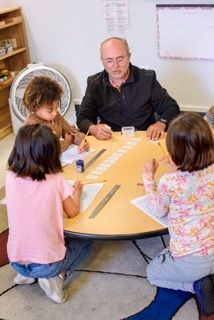
In our Primary classrooms at TRIS, we offer endless opportunities to build this foundation:
- Zipping jackets and tying shoes
- Pouring water without spilling
- Preparing and serving snacks
We also cultivate care for others and the environment. Once a child masters pouring, they use that skill to arrange flowers in a vase for their classmates. After learning to sweep, they take initiative when a friend spills. Caring for oneself and one's surroundings lays the groundwork for a life of active contribution.
The First-Plane Motto: "Help me do it myself."
Second Plane (Ages 6–12): Intellectual and Moral Independence
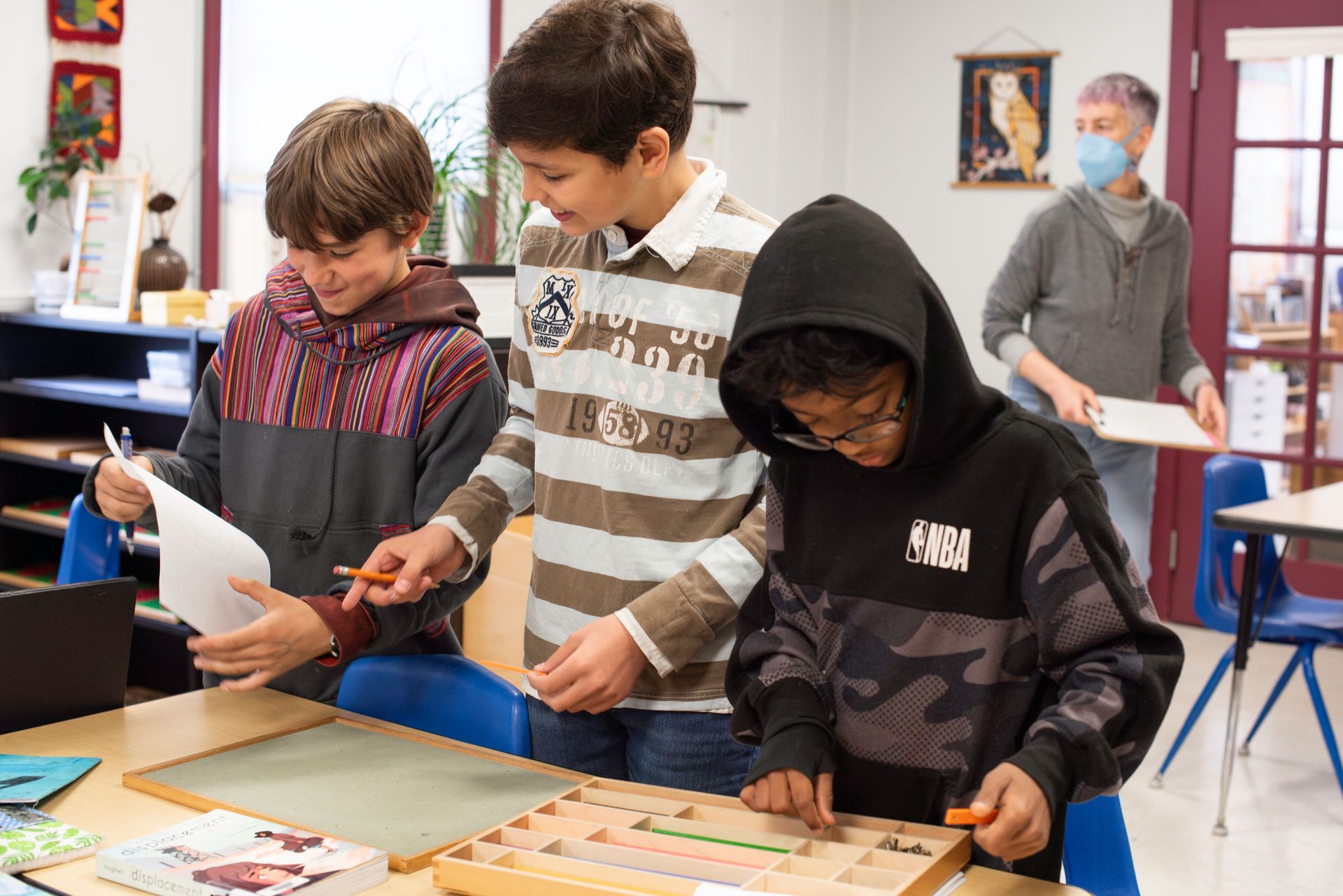
In the elementary years, the focus shifts from physical exploration to intellectual curiosity and moral reasoning. Children begin asking big questions: "Why?" "How?" "What if?" Their imaginations and capacity for abstract thought take center stage.
Socially, this is a period of intense peer collaboration. Children form close friendships, navigate group dynamics, and wrestle with concepts of fairness, justice, and community rules. Montessori described the elementary classroom as a "practice society"—a safe space where children rehearse the roles and responsibilities of adulthood.
Independence here becomes abstract. Students form their own opinions, research complex topics, solve interpersonal conflicts, and take ownership of their learning. In this environment, we see the natural emergence of interdependence: an older student helping a peer with long division, or classmates mediating a recess dispute using logic and empathy.
The Second-Plane Motto: "Help me think for myself."
Third Plane (Ages 12–18): Social and Economic Independence
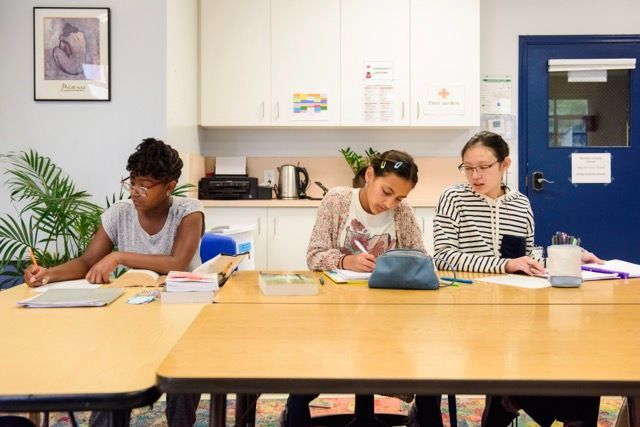
In adolescence, the drive for independence takes on a societal dimension. Teenagers naturally seek to understand their place in the world and make tangible, real-world contributions. They strive for both social and economic independence.
Adolescent Montessori programs meet this drive by connecting academic learning to practical application. Teenagers engage in meaningful work: running small entrepreneurial ventures, managing budgets, leading community service initiatives, and organizing long-term projects.
This is where all prior experiences of independence converge. Young adults apply their knowledge in service of others, discovering what they have to offer society and who they are becoming in the process.
Maturity, Independence, and Interdependence
Ultimately, a Montessori education supports three interconnected outcomes:
- Maturity: The holistic development of a grounded individual who is capable of making a meaningful contribution to the world around them.
- Independence: The practical, intellectual, and social skills built progressively across each developmental stage as a child learns to navigate their environment.
- Interdependence: The ultimate goal of the Montessori journey—the ability to collaborate, empathize, build relationships, and thrive within a connected community.
Why This Matters for Parents
Every act of independence—from a toddler putting on their own boots to a ten-year-old organizing a group project—is a step toward full participation in human society.
So, when your child insists on doing a task themselves, debates the fairness of a family rule, or seeks to resolve a problem without immediate adult intervention, take a moment to pause. These moments can require extra patience, but they are clear signs that your child is developing along a healthy, natural trajectory.
In Montessori, independence is not the end goal. It is the foundation for a lifetime of meaningful work, mutual respect, and authentic connection.
Experience Our Classrooms in Action
We invite you to see how our prepared environments nurture independence and community at The Renaissance International School.
Schedule a Tour to observe our classrooms.