During the elementary years, it can often seem like our children’s world revolves almost exclusively around their friends (and, let's be honest, their frenemies!). Dinner conversations shift from what they learned to detailed accounts of who sat with whom at lunch, what happened on the playground, or elaborate retellings of social wrongs.
When social dynamics take center stage, parents often find themselves wondering, "What are they actually learning at school?"
At The Renaissance International School, we always approach these developmental shifts through a Montessori lens. We seek to understand the "why" behind the behavior so we can offer the right support. When we look at six- to twelve-year-olds, their intense focus on peers isn't a distraction; it is a fundamental aspect of their development.
The Physical Transformation of Middle Childhood
As children approach six, distinct physical changes signal the entry into middle childhood. They lose their soft, "baby" features; their hair often becomes coarser; and, of course, their first teeth begin to fall out. Their bodies stretch and become more rugged. It’s as if they are literally becoming tougher!
Alongside this physical change comes incredible stamina. Elementary children can ride bikes, climb, swim, and play from dawn until dusk. This newfound toughness often means they make less of a fuss over scrapes or falls, but it can also mean that neatness and cleanliness are suddenly much less important. You may find yourself offering daily reminders to comb hair, brush teeth, or take a shower.
Why the Focus on Friends is Essential
This physical "toughening up" mirrors a significant psychological and social shift. Elementary-age children are actively developing their moral compass. Because their thinking is still largely black and white, they are constantly evaluating social interactions to determine what is "fair" and who is following the rules.
This is the era when tattling peaks—often not out of malice, but as an attempt to understand if a choice made by a peer was right or wrong. They are trying to make sense of societal rules, including how a group organizes itself: who leads, who follows, and what compromises are required.
Furthermore, elementary-aged children feel a strong developmental drive to extend themselves beyond the family structure. This natural process of separation from parents begins subtly. They might walk ahead on the sidewalk, resist holding hands, or exchange the long goodbyes of their toddler years for a quick wave. They are stretching toward the broader world, constantly seeking playdates and sleepovers.
All of this is entirely normal. In fact, deep peer involvement is essential for their social-emotional development. This is the period when children define who they are in relation to their society.
How Montessori Supports Social Learning
In our classrooms at TRIS, rather than working in opposition to this intense social drive, we use it as a catalyst for learning. We don't relegate socializing strictly to lunch and recess; instead, we integrate it into the core of our academic work.
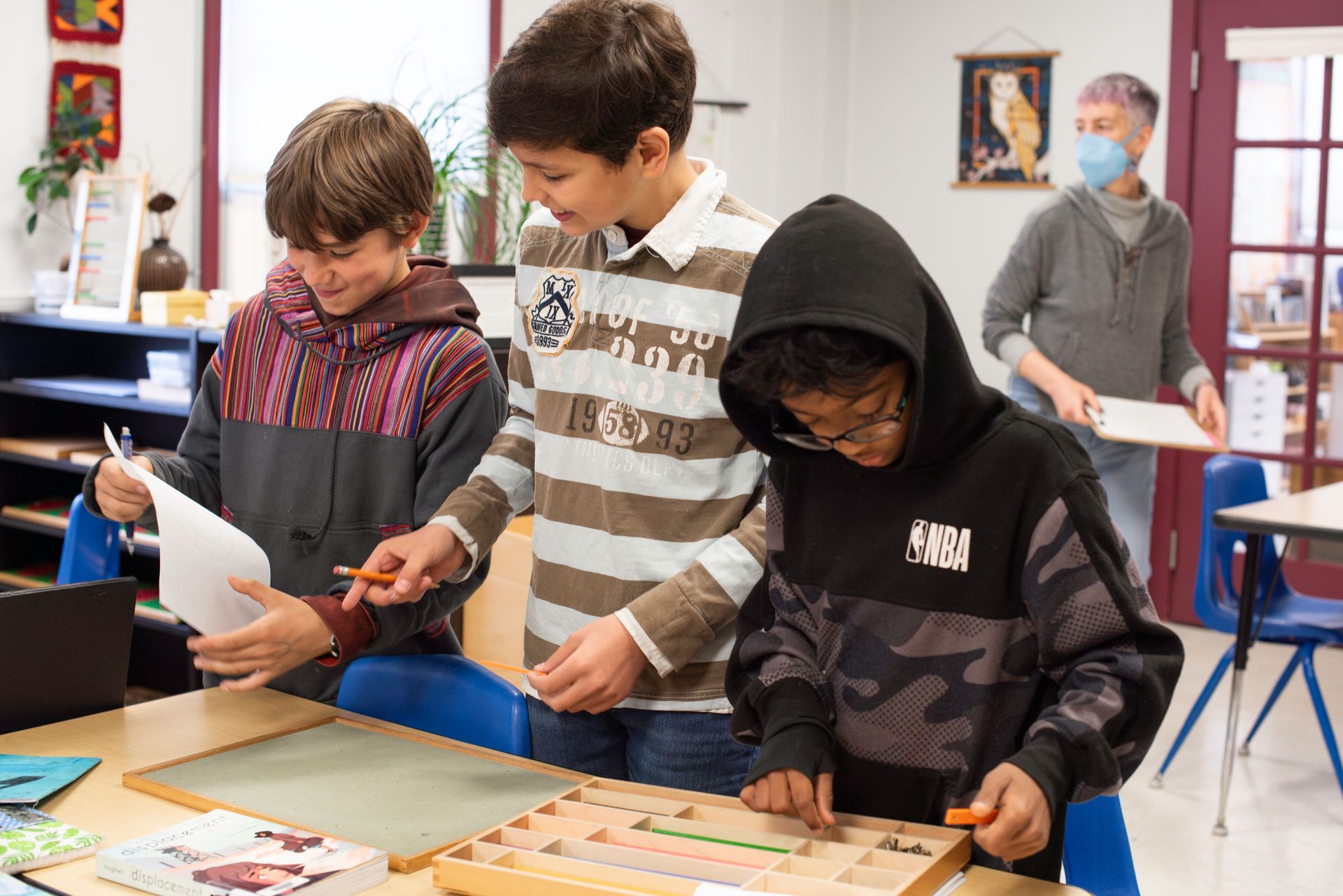
When you visit our elementary classrooms, you will see small groups of children collaborating. You might find two students constructing a complex timeline of American history, or a small group working through long division steps together. For the elementary child, social learning unlocks academic engagement. A hesitant writer is often inspired by a friend who wants to co-author a story; a shared research project on Ancient Egypt can spark a lifelong love of history.
We also recognize that elementary-aged children need to practice stepping out into the broader society. At TRIS, we encourage "Going Out" excursions. These are trips organized by the students themselves based on their research interests. A small group might coordinate an interview with a local expert, arrange a visit to a specific museum exhibit, or navigate going to a store to purchase supplies needed for a class project.
Supporting Your Elementary Child at Home
While these shifts can be challenging, it is a wonderful time to celebrate your child's emerging independence. The key is offering jobs and responsibilities that appeal to their sense of being capable.
At home, harness their physical stamina and desire for independence with meaningful chores:
- Send them on a distinct "errand" within the grocery store (e.g., "Find the specific apple sauce on our list").
- Have them deliver a note or package to neighbors.
- Introduce bigger outdoor work like weeding, mowing the lawn, or helping stack wood.
Finally, when your child comes home complaining about the latest playground drama, take a deep breath and remind yourself: it’s developmental. Focus on being a thoughtful, reflective listener. Acknowledge their feelings and resist the immediate urge to solve the problem for them. Processing these "practice society" issues with you allows them to develop their own conflict-resolution skills.
If a situation sounds particularly concerning, offer to help them brainstorm how they might proactively and respectfully communicate to solve the issue.
While it may seem like friends are everything right now, know that your child is simply practicing what it means to live, work, and collaborate in a society. Your patient understanding and supportive framework are giving them the tools to navigate that world successfully.