What, exactly, is the role of the Montessori teacher? How is it so different from that of any other teacher?
Sometimes it’s easiest to begin by explaining what a Montessori teacher isn’t.
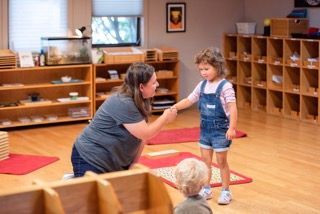
A Montessori teacher is less like the traditional idea of an instructor, and more like a gentle guide. They don’t consider it their job to give a child information. They rather lead children in the general direction and give them the tools they need to find the information themselves.
Maria Montessori once said, “The greatest sign of success for a teacher...is to be able to say, ‘The children are now working as if I did not exist.’”
Montessori Teachers Cultivate Independence
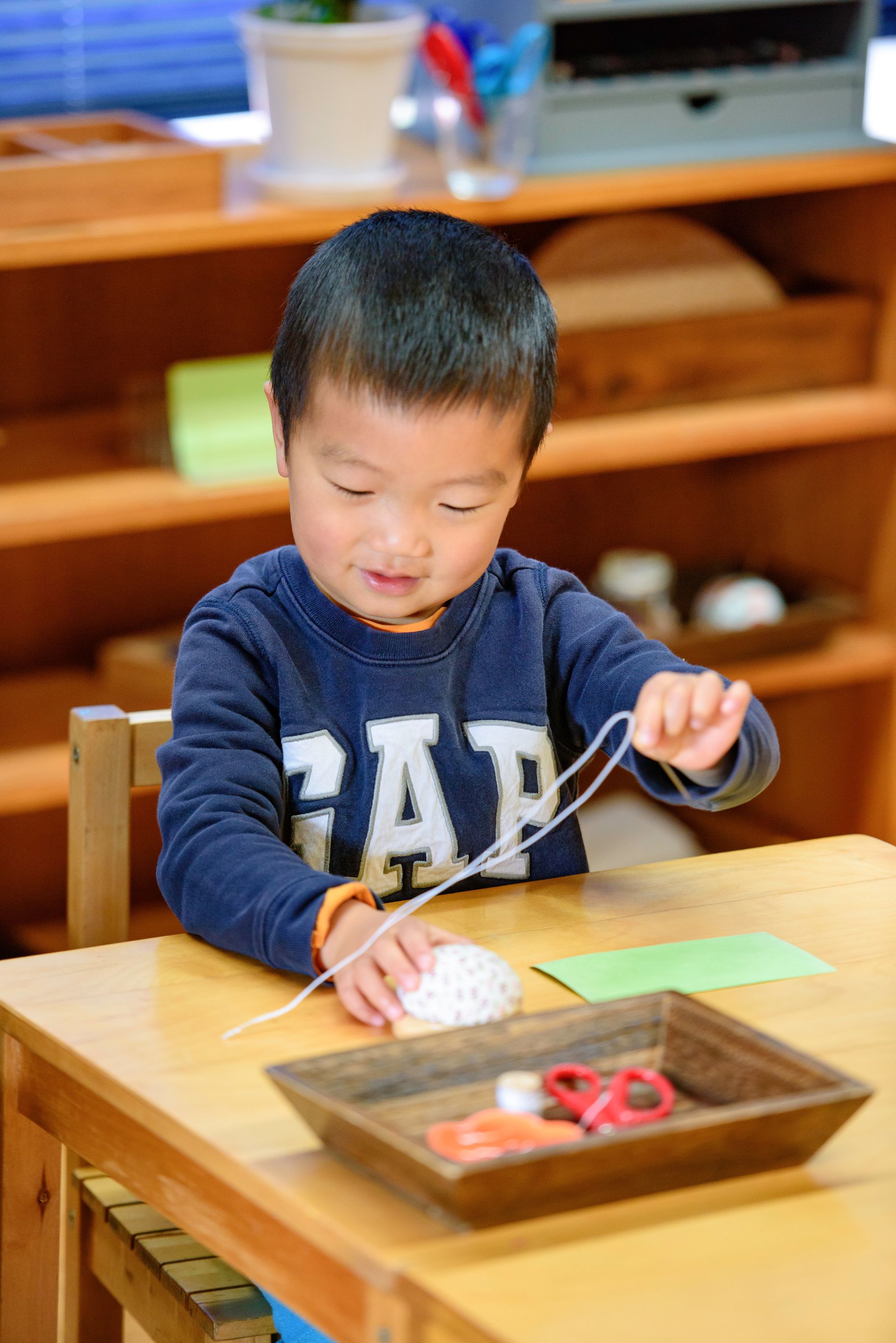
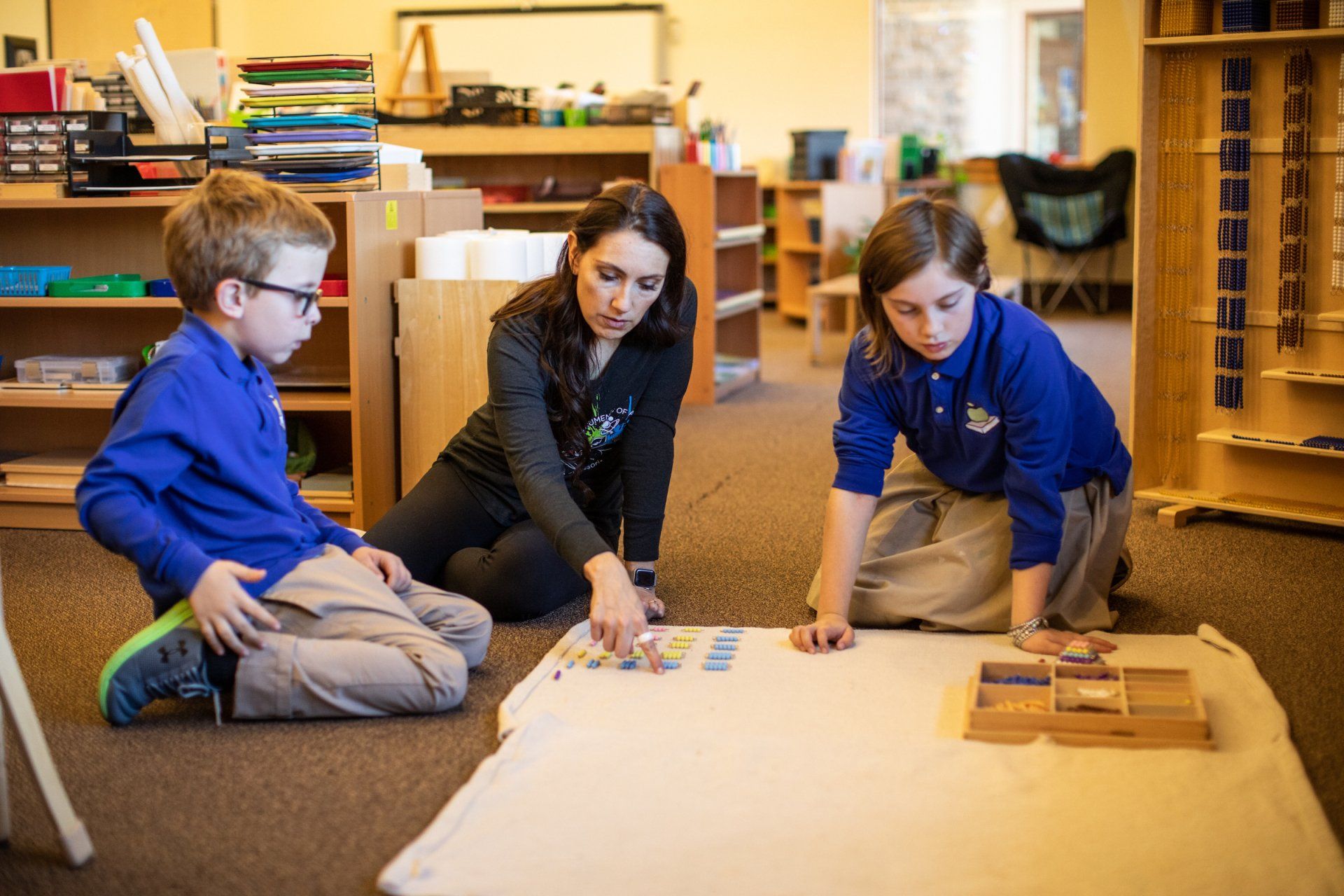
In a Montessori classroom, rather than seeing a teacher at the front of the classroom giving the same lesson to every child, the teacher will be working quietly with individual children or small groups. While that is happening the rest of the children are free to spend their time doing the work that calls to them. A Montessori teacher works hard to create structures that allow children to be independent and to trust themselves as learners.
One large part of what a Montessori teacher does is to intentionally prepare a classroom environment that is developmentally appropriate, is inviting to children, and supports them on their journey to work independently. This environment is constantly changing in tiny ways as the teacher notices new and evolving needs of the students.
Montessori Teachers are Trained to Think Like Scientists
Parents should know that Montessori teachers are highly trained. Most have recognized Montessori credentials in addition to their college degrees. Montessori certification programs are intensive and demanding; one might compare them as being the equivalent of another college degree. These training programs don’t just teach Montessori educators how to use the specialized materials; there is extensive coursework about Montessori philosophy, child development, and integrating the arts.
When it comes to assessments, Montessori teachers don’t rely on standardized tests; they rely on the power of observation. They have notebooks brimming with evidence of what their students have mastered, need more support with, and are curious about. They are constantly recording what they notice children working on, how that work is being executed, and ideas they might have in anticipation of a child’s next steps. Montessori teachers literally sit beside a child and determine exactly what they know about a wide range of content areas.
Montessori Teachers Think Long-Term
Because of Montessori’s three-year cycles, teachers have the unique ability to consider their big picture when working with students. There is a natural tendency to allow the children to genuinely learn at their own pace. Getting to know a child and their family well over the course of a few years really supports this approach.
Montessori Teachers are Often Called ‘Guides’
...and for good reason. While children in Montessori classrooms have an abundance of choice in their educational pursuits, Montessori is based on the idea of ‘freedom within limits’. It’s the Montessori teacher’s job to carefully craft those limits. Children rely on having a certain amount of structure in place. This gives them comfort and a safe place in which they can take risks and try new things. Montessori teachers set some boundaries and then carefully help students navigate within them.
What if your second grader loves to read but tends to avoid math? Their Montessori teacher will find ways to ensure the math still gets done. Sometimes this involves a gentle discussion with a child about time management skills, priorities, or setting goals. Sometimes the teacher will find a way to integrate the child’s interests into the less desirable work. Sometimes all it takes is a minor change in the environment. Montessori teachers gives children freedom, but they assist children in finding their way to success in this environment.
Montessori teachers value independence, self-reliance, and intrinsic motivation.
They also value cooperation, kindness, and strength in community.
Still curious? Call us to set up an appointment today to observe in a classroom. See what Montessori is really all about.