The Benefits of Multi-age Grouping
November 7, 2022

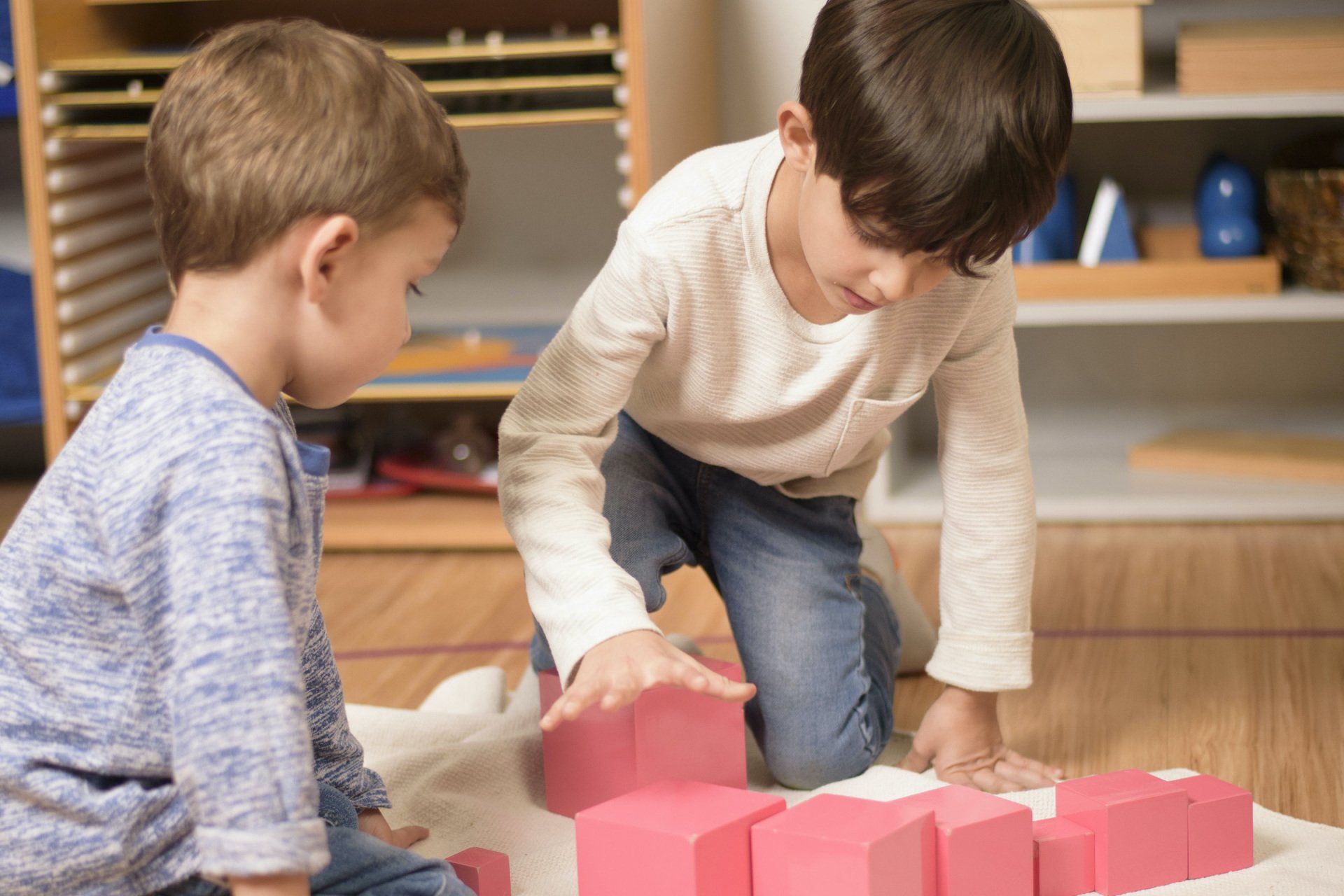
One hallmark of a Montessori education is the use of multi-age classrooms. 

Infants and toddlers may be together or separate, with a toddler classroom serving children 18 months to three years. Primary classrooms are for children ages 3-6, with preschool and kindergarten-aged children together. The elementary years serve children ages 6-12; some schools separate into lower (6-9) and upper (9-12) elementary, while many split elementary into two groups. Even Montessori middle- and high-school students learn in multi-age classrooms.


While Montessori is not the only type of education that utilizes this approach, it’s not what most people are used to. What are the benefits of structuring a classroom this way? Read on to learn more...


Learning at an Individual Pace


Children in multi-age classrooms tend to have a little more flexibility when it comes to mastering skills within a specific timeframe. We know that learning is not linear, and that learners have periods of significant growth, plateaus, and even the occasional regression. In multi-age classrooms, children are typically able to work at their own pace without the added pressure of keeping up with the whole group, or even being held back by the whole group. 


When children in a classroom range in ages, everyone has someone they can work with, regardless of their skill level. Children don’t feel left behind if they struggle with a concept, and they also don’t feel bored by repetition of something they have already mastered. Teachers who teach in multi-age classrooms typically have deep knowledge for a range of developmental abilities, leaving them well-equipped to differentiate instruction for each individual child.


Building Stronger Relationships


Traditionally children move from one class to the next each year. This means not only a new set of academic expectations, different routines, and different classroom structures, but a different teacher. 


In multi-age classrooms teachers have a longer period of time to get to know a student and their family, and vice versa. When teachers really get to know a student, they are able to tailor instruction in regards to both content and delivery. They know how to hook a specific child onto a topic or into a lesson. They know what kind of environment a child needs to feel successful.


Parents have an opportunity to get to know teachers better this way, too. If your child has the same teacher for two or three years, the lines of communication are strengthened. Parents get to know the teacher’s style and expectations. The home to school connection becomes more seamless, and the biggest beneficiary is the child.


Mentors and Leaders


When a child spends multiple years in the same class they are afforded two very special opportunities. 


Children who are new to the class are fortunate enough to be surrounded by helpful peer mentors. Children often learn best from one another, and they seek to do so naturally. First and second year students watch as the older children enjoy advanced, challenging work, and this inspires them. They look to the older children for guidance, and the older children are happy to provide it. 


After a year or two in the same room, students have a chance to practice leadership skills. In Montessori classrooms, the older children are often seen giving lessons, helping to clean up spills, or reaching out a comforting hand to their younger friends.


The best part is kids make the transition from observer to leader in their own time. It doesn’t happen for all children at the same time, but when it does it’s pretty magical to observe. 


Mirroring Real-Life


There is no other area in life in which people are split into groups with others who are exactly their chronological age. Whether in the family, the workforce or elsewhere, people ultimately need to coexist with people older and younger than themselves. Doing so makes for a more enriching environment, replete with a variety of ideas and skills. 


Why not start the experience with young children in school?


Moving On


While staying in the same class for multiple school years has many benefits, a child will eventually transition into a new class. While this can feel bittersweet (for everyone involved!) children are typically ready when it is time.


The Montessori approach is always considering what is most supportive of children depending on their development. When formulating how to divide children into groupings, Maria Montessori relied on her ideas about the Planes of Development. There are very distinctive growth milestones children tend to reach at about age 3, another set around age 6, and yet another at age 12. The groupings in our schools are intentional, and they give kids a chance to feel comfortable in their community, while also preparing them to soar forward when the time is right.
Peace and Montessori Education
By Renee Hites March 4, 2026
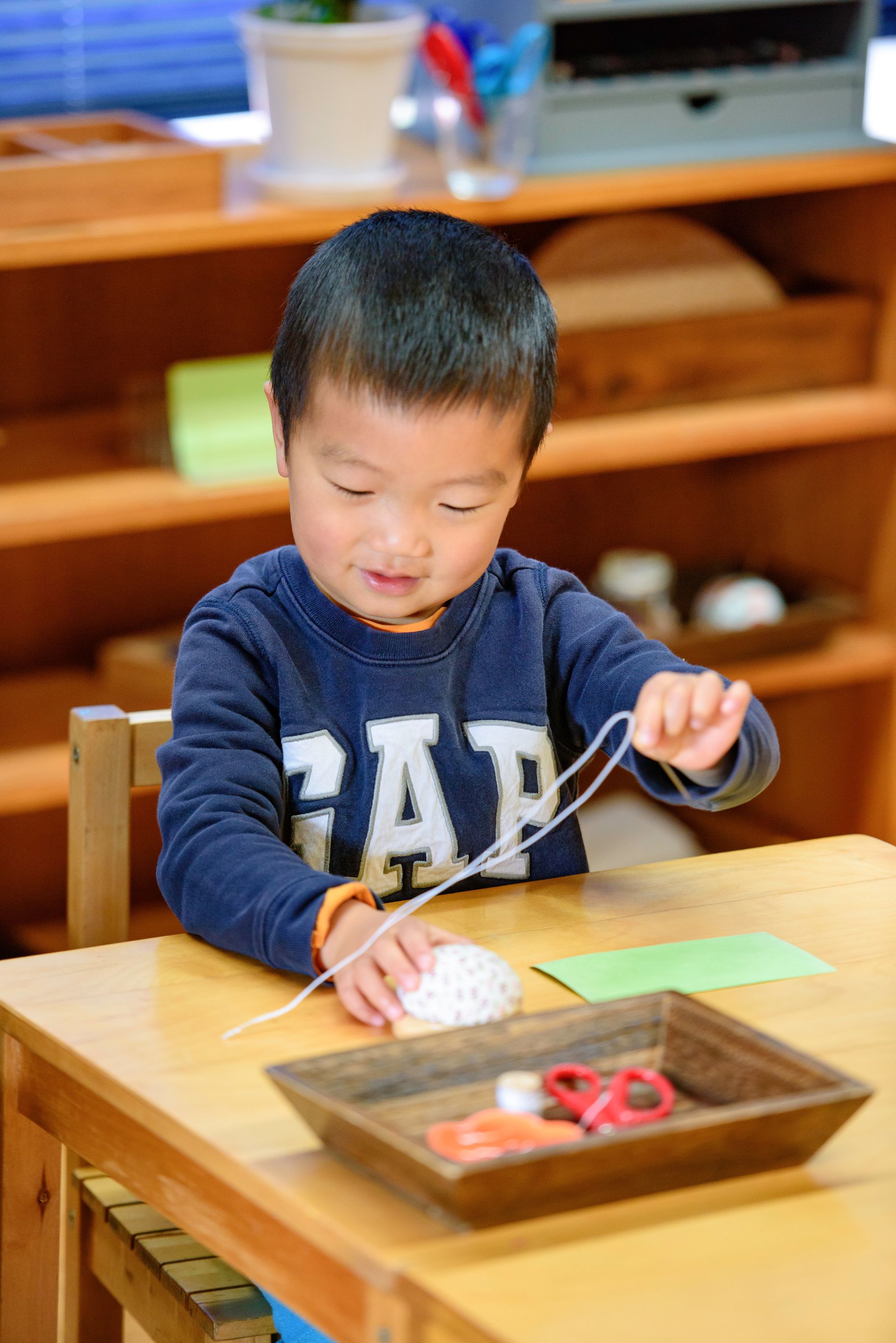
In a world that often feels rushed and fragmented, Montessori education offers something rare: a place where children are truly seen. It is an approach built not just on academic achievement, but on the belief that education, real education, has the power to change the world. Maria Montessori developed her method in the early twentieth century, but her deepest conviction was not about reading or mathematics. It was about peace. She believed that if we want a more peaceful world, we must begin with the child. " Establishing lasting peace ," she wrote, " is the work of education ." In a Montessori classroom, peace is not simply a topic that is taught. It is something that is lived. Children of different ages work alongside one another, learning to collaborate rather than compete. They develop independence, not because they are left alone, but because they are trusted. They are given real work that matters, real choices that shape their day, and real consequences that teach them to think carefully about their actions. This freedom, however, is always balanced with responsibility. Children learn to care for their environment, to resolve conflicts with words, and to consider the needs of others as naturally as they consider their own. Grace and courtesy are woven into the fabric of every day, not as rules imposed from the outside, but as habits grown from the inside. Montessori also understood something profound about the child's relationship with the world itself. Through Cosmic Education, the sweeping story of the universe, the Earth, life, and human civilization, children come to see themselves not as isolated individuals, but as participants in something vast and interconnected. They learn that every living thing depends on every other, that the air we breathe was shaped by ancient organisms, that the words we speak carry the fingerprints of countless civilizations. This perspective cultivates humility, wonder, and a deep sense of responsibility toward the world and toward one another. What you will see today in our classrooms is a reflection of that vision. The quiet concentration, the purposeful movement, the children helping one another: these are not accidents. They are the fruits of an environment carefully prepared to bring out the best in each child. Montessori education does not promise to solve the world's problems. But it does promise to raise children who are capable of empathy, who know how to listen, who find meaning in contributing to something greater than themselves. And in that promise lies something quietly extraordinary: the possibility that the children in these rooms might one day help build the more peaceful world we are all hoping for.
Afternoon In Elementary
By Wellington Pontes Filho February 12, 2026
An Afternoon in Elementary is a wonderful opportunity for preschool and Kindergarten families to experience the Montessori Elementary environment and learn more about this exciting next step in their child's journey. This event is designed to help parents understand how Montessori Elementary builds naturally upon the foundation established in the primary years. In Elementary, children continue to grow as independent, confident learners while engaging with big ideas in math, language, science, and cultural studies through hands-on materials, collaborative work, and guided exploration. This year, our An afternoon in Elementary event was again a great success, bringing together children and their parents for a variety of engaging activities. These activities were led by Elementary students, with the support and supervision of Elementary staff and parent volunteers. The participants enjoyed the wonderful freshly baked French bread, explored the wonders of magnetism through experiments, and discovered a love of botany at the gardening and pot-decorating stations. There was great excitement during the math relay and while sewing geometric shapes. In Elementary, we also care for the health of both mind and body, which was reflected in the sports relay station. Creativity shone through our arts and crafts and face-painting stations. It was gratifying to see our Elementary students confidently engage with the younger students with empathy and warmth, guiding them through each activity and sharing their enthusiasm throughout the event. Elementary parent ambassadors were essential to the event's success. They warmly welcomed Primary families, shared information about our Elementary Montessori program, answered questions, and guided children between activity stations. Their support of the Elementary teachers helped create a smooth, welcoming, and engaging experience for all. We know that transitioning to Elementary can bring questions about readiness, independence, and academic expectations. An Afternoon in Elementary offers a space to see how children are supported socially, emotionally, and academically, and how the Elementary environment nurtures curiosity, critical thinking, and a love of learning. We want to extend a sincere thank you to our community for participating in the Afternoon in Elementary event . Their curiosity, enthusiasm, and joy made the event truly special. Warmly, Wellington Pontes-Filho Elementary Program Director