From Curiosity to Confidence: Inside Our Cultural Research Presentations
Wellington Pontes-Filho • March 30, 2026

Celebrating Student Research: Elementary Cultural Presentations

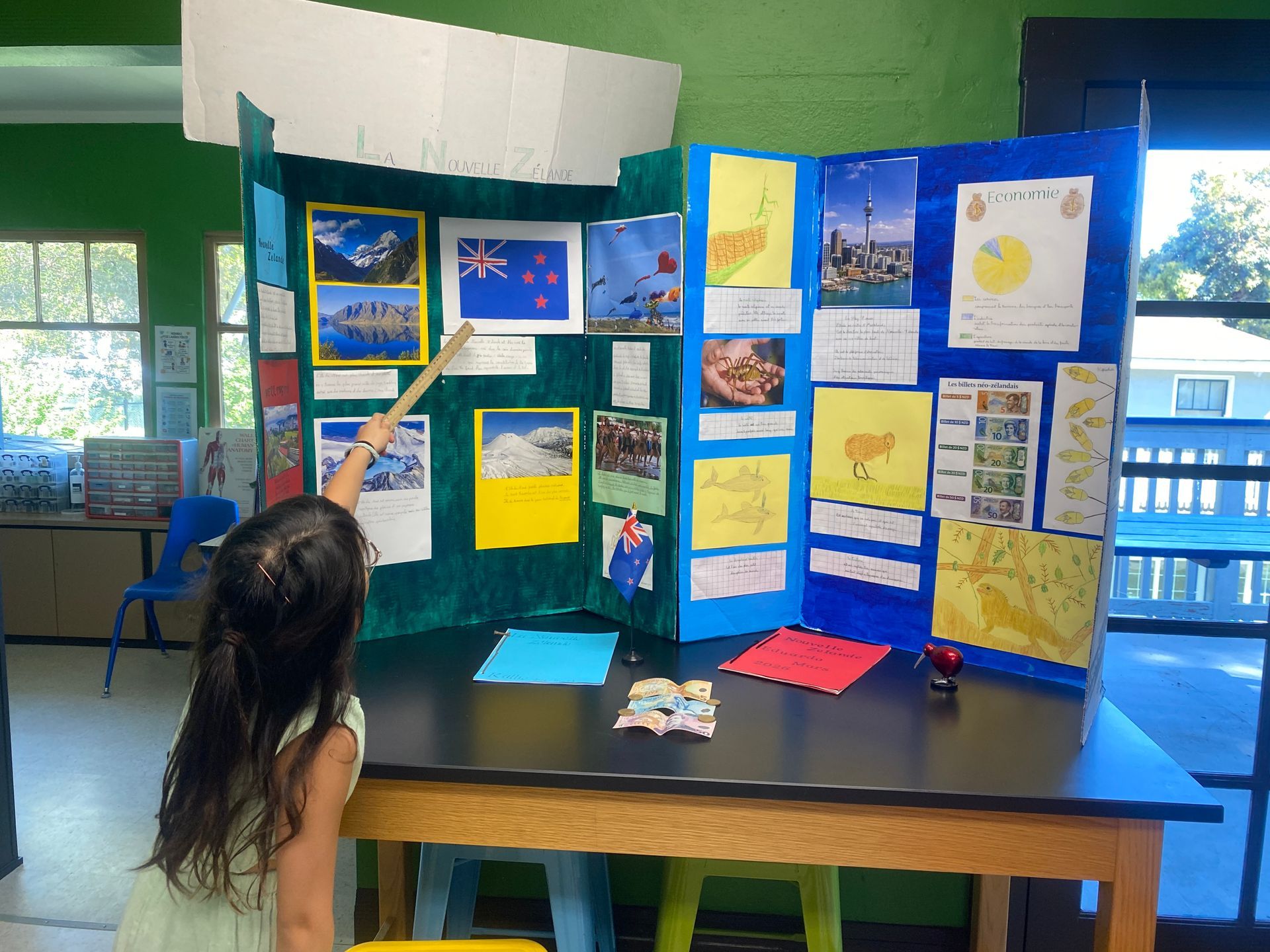
One of the most beloved traditions at TRIS, the annual Elementary Cultural Research Project Presentations offer a window into the depth, curiosity, and confidence cultivated in our classrooms. This special event brings together students, families, and teachers as our elementary learners share in-depth research on different continents, celebrating academic, social, and emotional growth and the joys of curiosity, exploration, and discovery.

This year, students in the Cedar Classroom (Lower Elementary) journeyed through Oceania, while students in the Laurel Classroom (Upper Elementary) explored North America, each group diving deeply into the geography, history, cultures, and stories that shape these regions.


A Multilingual Academic Experience

Language is at the heart of each project. Students choose to present in Spanish, French, or English, and carry that choice through every stage of their work—from research and note-taking to writing and presenting. On presentation day, they not only share their findings but also respond to audience questions in their chosen language, demonstrating confidence and authentic language use in a meaningful academic context.


The Research Journey

The process begins with an introduction to the continent of study, designed to spark curiosity and build foundational knowledge. From there, students brainstorm and select topics that genuinely interest them, taking ownership of their learning from the very start.

Research unfolds thoughtfully and intentionally. Students gather information primarily from books—drawing from both the school library and local public libraries—turning to online sources only when needed. As they read, they capture key facts on individual index cards, a method that supports organization, comprehension, and the development of strong writing skills.


These notes become the building blocks of their first drafts, which are carefully reviewed by teachers before students refine and polish their final reports. Alongside their writing, students create detailed, hand-drawn illustrations and develop their presentation boards.

Practice is an essential part of the journey. Students rehearse their presentations with classmates and teachers, receiving feedback, strengthening their delivery, and building confidence. This steady, supportive progression prepares them for the culminating event.


A Joyful Celebration of Learning

On presentation day, the energy is palpable. Students speak with pride and enthusiasm, engaging visitors of all ages as they share their work and respond to thoughtful questions. It is a powerful moment—one where knowledge, confidence, and communication come together.

For our students, this experience builds lasting skills in public speaking, critical thinking, and self-assurance. For families and guests, it is both inspiring and deeply moving to witness the depth of understanding and poise our students bring to their work.


Sharing Culture Through Community

The celebration continues as families and guests gather to enjoy refreshments inspired by the continents studied—a simple yet meaningful way to extend the learning and come together as a community.

We are incredibly proud of our students, and deeply grateful to our teachers and families who support and sustain this rich tradition. We look forward to another year of curiosity, exploration, and shared discovery at next year’s Elementary Cultural Research Project Presentations.
Peace and Montessori Education
By Renee Hites March 4, 2026
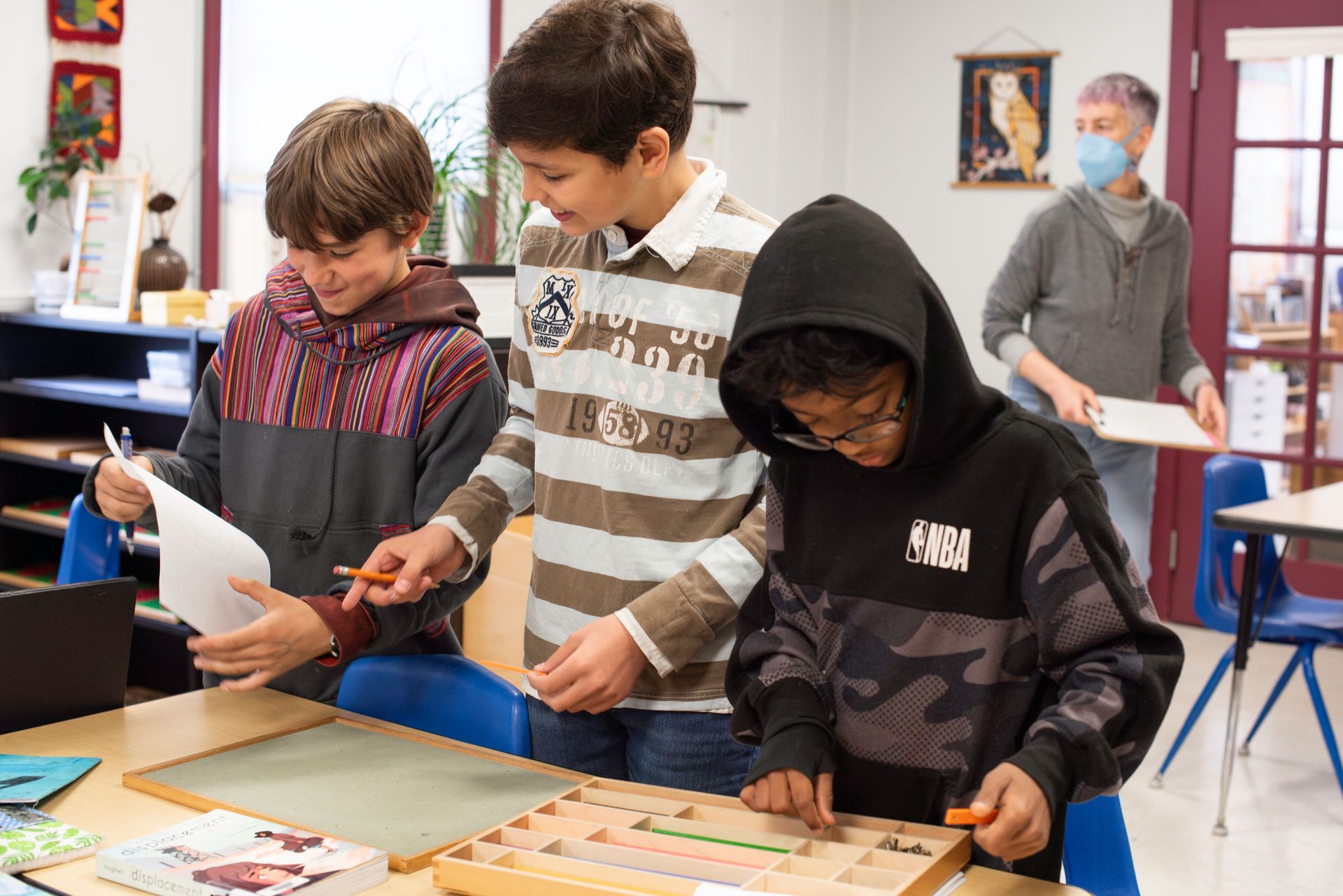
In a world that often feels rushed and fragmented, Montessori education offers something rare: a place where children are truly seen. It is an approach built not just on academic achievement, but on the belief that education, real education, has the power to change the world. Maria Montessori developed her method in the early twentieth century, but her deepest conviction was not about reading or mathematics. It was about peace. She believed that if we want a more peaceful world, we must begin with the child. " Establishing lasting peace ," she wrote, " is the work of education ." In a Montessori classroom, peace is not simply a topic that is taught. It is something that is lived. Children of different ages work alongside one another, learning to collaborate rather than compete. They develop independence, not because they are left alone, but because they are trusted. They are given real work that matters, real choices that shape their day, and real consequences that teach them to think carefully about their actions. This freedom, however, is always balanced with responsibility. Children learn to care for their environment, to resolve conflicts with words, and to consider the needs of others as naturally as they consider their own. Grace and courtesy are woven into the fabric of every day, not as rules imposed from the outside, but as habits grown from the inside. Montessori also understood something profound about the child's relationship with the world itself. Through Cosmic Education, the sweeping story of the universe, the Earth, life, and human civilization, children come to see themselves not as isolated individuals, but as participants in something vast and interconnected. They learn that every living thing depends on every other, that the air we breathe was shaped by ancient organisms, that the words we speak carry the fingerprints of countless civilizations. This perspective cultivates humility, wonder, and a deep sense of responsibility toward the world and toward one another. What you will see today in our classrooms is a reflection of that vision. The quiet concentration, the purposeful movement, the children helping one another: these are not accidents. They are the fruits of an environment carefully prepared to bring out the best in each child. Montessori education does not promise to solve the world's problems. But it does promise to raise children who are capable of empathy, who know how to listen, who find meaning in contributing to something greater than themselves. And in that promise lies something quietly extraordinary: the possibility that the children in these rooms might one day help build the more peaceful world we are all hoping for.
Afternoon In Elementary
By Wellington Pontes Filho February 12, 2026
An Afternoon in Elementary is a wonderful opportunity for preschool and Kindergarten families to experience the Montessori Elementary environment and learn more about this exciting next step in their child's journey. This event is designed to help parents understand how Montessori Elementary builds naturally upon the foundation established in the primary years. In Elementary, children continue to grow as independent, confident learners while engaging with big ideas in math, language, science, and cultural studies through hands-on materials, collaborative work, and guided exploration. This year, our An afternoon in Elementary event was again a great success, bringing together children and their parents for a variety of engaging activities. These activities were led by Elementary students, with the support and supervision of Elementary staff and parent volunteers. The participants enjoyed the wonderful freshly baked French bread, explored the wonders of magnetism through experiments, and discovered a love of botany at the gardening and pot-decorating stations. There was great excitement during the math relay and while sewing geometric shapes. In Elementary, we also care for the health of both mind and body, which was reflected in the sports relay station. Creativity shone through our arts and crafts and face-painting stations. It was gratifying to see our Elementary students confidently engage with the younger students with empathy and warmth, guiding them through each activity and sharing their enthusiasm throughout the event. Elementary parent ambassadors were essential to the event's success. They warmly welcomed Primary families, shared information about our Elementary Montessori program, answered questions, and guided children between activity stations. Their support of the Elementary teachers helped create a smooth, welcoming, and engaging experience for all. We know that transitioning to Elementary can bring questions about readiness, independence, and academic expectations. An Afternoon in Elementary offers a space to see how children are supported socially, emotionally, and academically, and how the Elementary environment nurtures curiosity, critical thinking, and a love of learning. We want to extend a sincere thank you to our community for participating in the Afternoon in Elementary event . Their curiosity, enthusiasm, and joy made the event truly special. Warmly, Wellington Pontes-Filho Elementary Program Director