
How do we prepare our children for a future no one can fully predict?
As parents, we naturally want to give our children every possible advantage. But what does true success look like? Is it academic achievement? The ability to provide for oneself? Finding joy in one’s work? Contributing meaningfully to our communities? Or perhaps developing a lifelong love of learning?
At The Renaissance International School, we believe it should be a balance of all these things.
Montessori education offers a proven, time-tested approach to nurturing capable, confident, and joyful human beings. Here is a look at how our prepared environments and child-centered approach set children up for a fulfilling life, both inside and outside the classroom.
1. Strong Academic Foundations Rooted in Research
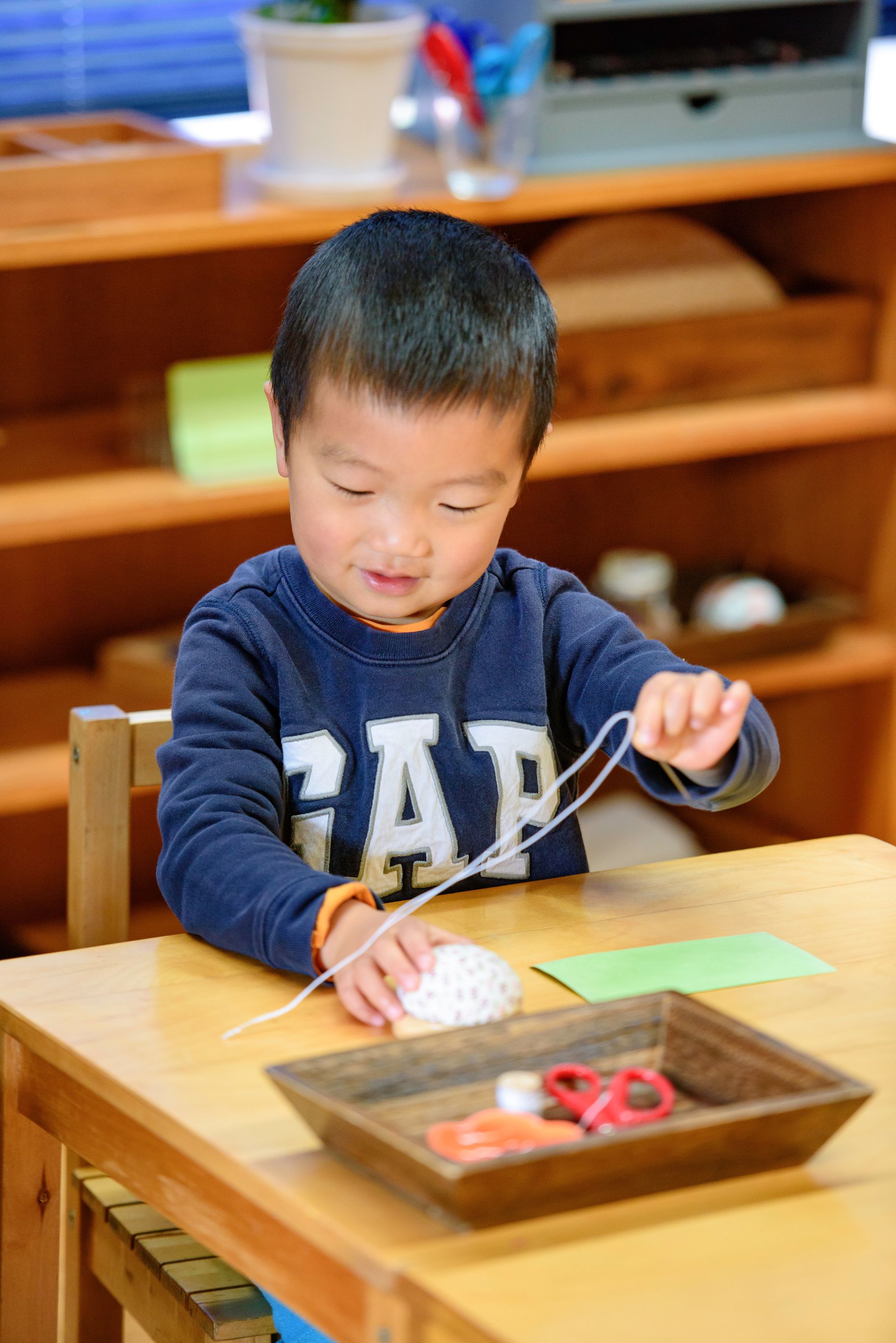
Montessori education introduces foundational concepts in mathematics, language, and the sciences earlier and more intuitively than traditional methods. Rather than relying on rote memorization or abstract worksheets, children work with hands-on, tactile materials that make complex concepts tangible.
Recent research continuously validates this approach: concrete learning experiences early in life build stronger neural pathways for abstract thinking later on.
2. True Independence and Confidence
Building self-reliance is at the heart of everything we do at TRIS. Children of all ages are capable of far more than adults often realize.
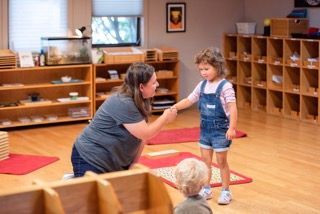
Our Guides learn to sit back, observe, and intervene only when necessary. By giving children the space to pour their own water, put on their own shoes, or resolve a challenge with a peer, we allow them to experience genuine self-efficacy. The result is a deep, quiet confidence that stays with them for life.
3. Deep Connection to the World and Community
Respect for the environment and an understanding of our interconnected world are woven directly into the Montessori curriculum—particularly in the Elementary years. Around age six, children naturally begin asking big questions: Where do I fit in the universe? How did our world come to be?
Through our "Cosmic Education" framework, we introduce the origin of the universe, the solar system, and the diversity of life on Earth. We meet children right at their moment of peak curiosity, fostering a lifelong sense of stewardship and wonder.
4. Purposeful Freedom Within Limits
Choice and agency are fundamental human needs. In a Montessori classroom, children choose their work because we trust their natural drive to learn.
However, freedom always comes with age-appropriate responsibility and accountability. A child might choose the order in which they complete their work during the morning block, but they understand that essential goals must still be met. This balance teaches authentic time management, self-regulation, and focus—skills that are essential for long-term academic and personal success.
5. Cultivating Curiosity Over Memorization
Instead of drilling arbitrary facts to pass a standardized test, we help children learn how to learn. All students receive comprehensive lessons across science, geography, history, and language, and they are given the time and space to research topics deeply when a spark of interest strikes.
This approach turns learning into an active pursuit rather than a passive obligation.
What the Research Says About Montessori
While Montessori education has been practiced for over a century, modern educational research is catching up—and the findings are remarkable:
- Academic & Social Gains: A study on public Montessori preschools found that children in Montessori environments made significantly higher academic gains and demonstrated stronger executive function, social understanding, and enjoyment of work compared to peers in non-Montessori settings.
- Closing the Achievement Gap: Research indicates that high-fidelity Montessori programs help mitigate factors that traditionally hinder success, such as socio-economic disparities.
- Smooth Transitions & Long-Term Success: Studies tracking students who transition from Montessori to traditional secondary or higher education settings show that Montessori graduates adapt exceptionally well. They are equipped with strong critical thinking skills, high self-motivation, and creative problem-solving abilities.
Many notable figures—from innovators and artists to entrepreneurs—credit their early Montessori education with shaping their creative outlook and drive.
A Community for the Whole Family
Beyond academic and social growth for children, The Renaissance International School provides something equally vital: a community for parents and families.
In a fast-paced world where true connection can be hard to find, our school serves as a gathering place. Parents, guides, and staff work together, share insights, and form lasting relationships rooted in shared values for their children's upbringing. When you enroll your child at TRIS, your whole family joins a supportive, welcoming village.
Discover the Montessori Difference at TRIS
Whether you are exploring program options for your toddler, primary-aged child, or elementary student, we invite you to experience our vibrant community in person.
Schedule a tour today to see our classrooms in action.