Welcome to the 2024-2025 School Year!
As we prepare the classroom for an exciting new year, we hope you are enjoying this last stretch of summer. The beginning of each year brings with it a time to reset and review routines. As you know, children do best in structured environments where they know the expectations for themselves as well as the daily routine. As we head into the new school year, we think it might be helpful for your child (and yourself) to know some of these school routines and implement what you can at home. These activities provide routine and structure that when practiced, allow your child to not only reinforce crucial skills for growth and development but also thrive in their learning journey. Finally, we also want to share some ideas for making the transition to school easier, especially for our younger and new students.
Mealtimes
At school:
Food preparation and meals are important parts of our daily lives. At school, children will be involved with setting the tables, pouring water to drink, cleaning up after themselves, and occasionally preparing food.
We also practice patience during mealtime. For example, we wait to eat until everyone is ready so that we can partake in the meal together. When finished eating, the children ask to be excused before cleaning their plates, table, and floor around them.
At home:
Children can be part of preparing the table and then clearing the dirty dishes after the meal. We recommend having a clear routine for cleaning up, which can include putting dirty dishes in the sink, dishwasher, or a dish tub after eating. We also encourage the use of cups and glasses for meals and snacks, saving a water bottle for when in the car or on walks. Younger children should be encouraged to use silverware to feed themselves.
Older children can be involved with setting the menu for meals and even helping with grocery shopping. They can start to map out what they want to pack for lunch and be part of the process of getting their food ready in containers and everything into their lunch box. This also helps children have ownership and buy-in about what they are eating.
While the teachers are always available to help, we recommend that your child have food containers that are easy to open and close. Bring your child with you to the store to try opening different kinds of containers. This is a great way to find some that work well!
Prepare a Goodbye Routine
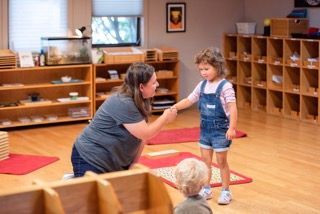
To be ready for the first days of school, we recommend preparing your child (and yourself) for what drop-off will look and feel like. As adults, the more clear we are about the routine, the more secure our children will feel.
Short and sweet transitions are key. The longer we linger the harder it is for our children to recalibrate and settle into the classroom. To that end, figure out your goodbye process ahead of time. Perhaps it is one hug and two kisses, plus a wave goodbye. Whatever you decide, stick with it. Our children are hard-wired to test our limits and they will want to figure out if they can negotiate two hugs and a wave goodbye then more hugs. However, if that negotiation is successful, they actually feel less secure because then they can’t rely upon a predetermined plan.
Most classrooms in primary request that goodbyes be said before opening the door or entering the classroom. Please keep in mind that the other children in the class may already be working or having a hard time with the transition from home themselves. It can be upsetting to them when witnessing a friend’s extended goodbye. Again, teacher’s are here to help. If your child is struggling with their goodbye, please contact your classroom teacher for help. They may be able to give you tips to help with you particular student or come up with a routine together with you.
If you do decide on a goodbye routine, practice! While at home and when everyone is in a great mood, suggest a game of pretending you are doing drop-off at school. Remember (or create) the goodbye routine and then act it out together! Take turns being the adult and the child (children love getting to be the adult). Playacting is a fun way to work through what can be a stressful few moments.
By establishing clear and firm routines, we help our children develop trust and confidence. If we feel hesitant or unsure, our children absorb those feelings. So we want to exude assuredness!
Adjust Schedules
If children have been staying up later during the long days of summer, it helps to gradually shift bedtimes and establish a consistent routine. If children have been going to bed later, start easing into a bedtime that is earlier by using 15-minute increments over a series of days. Rushed mornings tend to be more difficult, so putting some additional effort into getting enough sleep and having plenty of time in the morning can really help the transition back to school.
Although earlier mornings can be tough, children do better when they can get to school with enough time to settle in. We recommend trying to come on the early side of the arrival window so that children aren’t overwhelmed by the hustle and bustle of last-minute or late arrivals. Coming late can also mean that they miss out on some of the benefits of the Montessori work cycle. As a reminder, children in their kindergarten year are expected to arrive by 8:30.
Think About What to Wear
Children are learning to dress and undress themselves. As such, it helps if they wear loose fitting clothing. Especially our toddler friends who are learning to use the potty, a pants without buttons such as leggings or sweats might be a better choice. We know it requires a great deal of patience on the part of the adult, however It is crucial for these young people to practice these skills at home. We recommend giving your child the time and encouragement to do things for themselves, including taking shoes off, pulling pants up, unzipping jackets, and so on. Choosing clothing and shoes that are easy for your child to put on and take off is a big help for the transition to school. We ask that children avoid shoes with shoelaces until they are able to independently tie them. This is a lesson in the primary classroom and teachers will share with you when we think tie shoes are appropriate for school.
Some children have strong opinions about what they wear to school. You can help them (and you) by allowing them to choose their clothes the night before school. This should help with the morning rush. Older children can gather their belongings to make sure they have everything ready for the first day of school (and every subsequent day!). They can check the weather to determine appropriate outerwear and shoes, practice setting out their clothes the night before, and prep items needed for after-school activities.
Please make sure your children’s clothing is labeled with their name.
Check-In
As always, please let us know if you need anything or have any questions. The teachers are more than happy to help! Also, be on the lookout for a beginning of the year e-mail from your classroom teachers with more specific information and instructions on your child’s class.
Cheers to a great year!
Katrina Cisne