Summary
We met with Renee Hites, Head of School to cover a number of in depth topics on where the school is, some highlights
- ↗️Things are coming together nicely this year, really seeing the difference post covid on the child development front
- Still trying to increase enrollment in many of the classrooms
- We are looking into ways to reopen Junior High as well, stay tuned!
- 👏Thanks to the TPA for fundraising and enabling all the kids to go on field trips this year
- See the detailed notes for more highlights
TPA General temperature check
- 🎾Launching “First Fridays” for parents to get to know each other
- Once a month, Dec 6 will be the first at The Hub
- 🙏Pay your dues: check the FLYER, for more detailed notes or send $150 for one child or $200 for families of two
- via Zelle to renaissancetpa@gmail.com (the organization is listed as “A Parents World Association”).
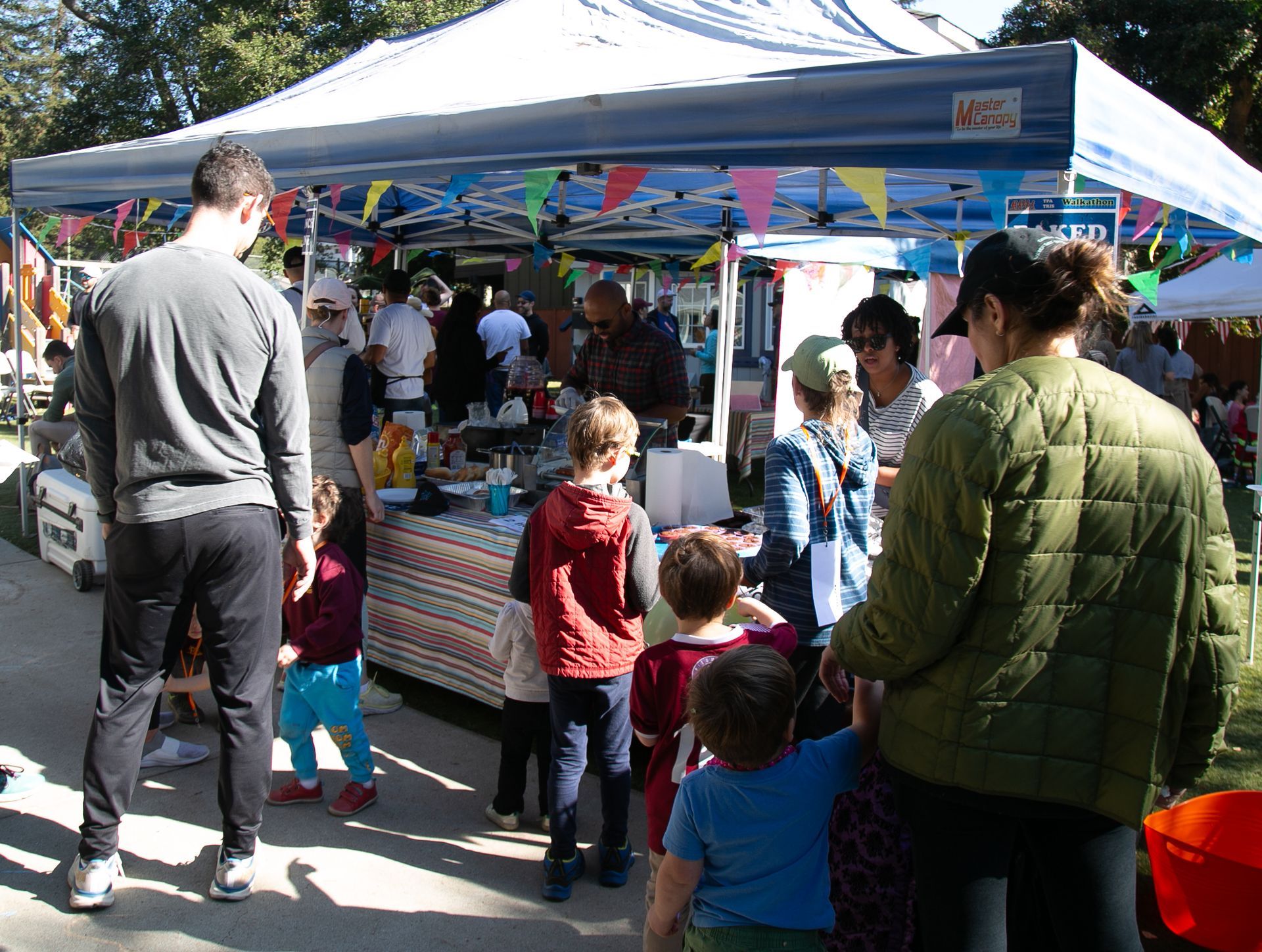
- 🎀Walkathon raised about $13k gross, probably around $11k net, 20% of which will go to Covenant House
Detailed Notes
- Introduction – Rowena, co-chair of TPA
- Renee Hites, Head of School
- Thanks to TPA for all of the support, and for the Walkathon which is a great tradition
- Will start by talking about beginning part of the year, then enrollments.
Update on the year so far:
- Two great outdoor education trips for elementary students, two field trips for primary (one with all primary students), thanks to TPA for that.
- Initiation of the capoeira class, teacher speaks primarily Portuguese, amazing to see the kids who just seem to understand based on their prior training in Spanish and/or French in addition to English
- We are always looking for additional offerings, if people have ideas for extracurricular activities it may be possible to find ways to bring it in
- After the pandemic, it has taken some times to bring things back
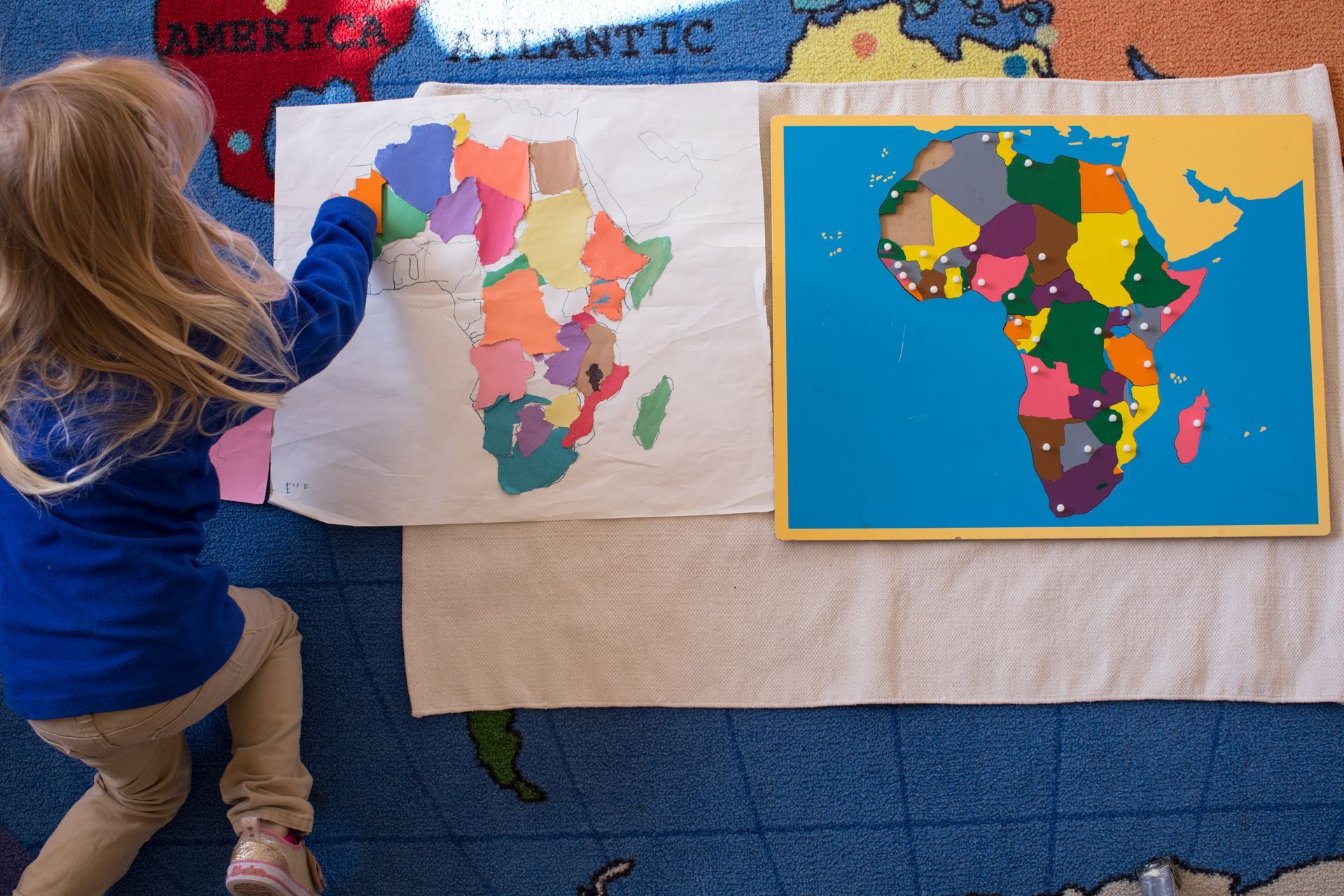
- 5th and 6th year students are preparing for Montessori Model United Nations program in Rome (April 2025). They will have their first online session with MMUN participants from other schools this Friday. Since our Upper Elementary children are studying Africa this year, each one is representing an African country and has a UN Committee assignment corresponding to that country (e.g., UN Committee on Women, FAO, etc.)
- One of the best things about this time of the year is seeing the growth. Renee recounted the tremendous and visible development in one student who just transitioned from pre-primary to primary, for instance.
- Renee recently found notes on her doorstep from Upper Elementary students – they were not pleased with her decision not to permit devices in the classroom to allow individual listening to music during the work period. She explained that we don’t have devices without the Internet. The children said they would find a way to bring in music on devices without the Internet. Renee said if they can come up with a solution, she will consider it.
- This is the kind of autonomy and advocating for themselves that she loves to see. Those moments bring a lot of joy.
- We are in the process of preparing for the Thanksgiving feast and the end of year concerns
Enrollment
- Where we are with enrollment – fewer kids in the classroom than before Covid – most people have experienced having small classrooms when joining (due to Covid, had 12 person pods). But we are targeting some growth this year.
- We have also done a lot of work to be better about communication internally as well as marketing externally (multi-channel communication, room parents, etc.)
- In general, schools in the area have seen a decline in enrollments.
- We run a program that does not compare to any other elementary program in the area, when you look at trilingual program, arts and music, executive function, independence, and international travel. As an anecdote – Sara Sangco’s daughter Elise graduated from TRIS junior high and
was recently talking to a student who went to another international school but had not traveled internationally with their school ever. (Elise: “what makes them an international school then?”). Sara noted that Elise has been to Mexico, Ecuador, Italy (the France trip was canceled due to
Covid) with TRIS.
Jr. High
- There have been questions about the future of Jr High. At this point, there is not a hard-and-fast date but our goal is to bring it back.
- If we could have Montessori all through high school, it would be very beneficial for our students.
- One question is to see the interest and commitment on the part of families to make this happen. It is a question of enrollment and teachers. She will be reaching out to current Upper Elementary families about their interest and intent.
- We have a fantastic staff who have been here a very long time. But sometimes people’s lives take a different turn and they depart. We do a lot of internal training for staff who are already at TRIS.
- Goal for this/next year would be increasing enrollments and hoping to open junior high next year
Q&A with Renee Hites, Head of School. Additional responses from Sara Sangco Tan, Willow Montessori Guide and TRIS Parent
- Q: What traditional grades is Jr. High?
- Renee: Upper elementary is the equivalent of 4th-6th grade. Jr High is the equivalent of 7th through 9th grade (though typically in the past most have left after 8th).
- Traditional schools often start middle school in 6th grade. We believe 6th graders are not adolescents yet. She took the group to Mono Lake, not one is (yet) an adolescent, maybe, by the end of the year.
- Q: What does full capacity look like?
- Renee: Pre-primary is full right now. We are thinking about the end of the year because Ideally we would be at 24 students in each of the classrooms. Now we are estimated to end the year with 19 in two of the classrooms and 21-22 in the other two classrooms. Definitely we are going to fill up but we still have some room. Technically in the past we have had over 24 students in the classroom, and hired floaters (because of breaks).
- Philosophically in a Montessori classroom, more students is better (autonomy and social regulation)
- Sara: Smaller the classes, the more students depend on adults. Circle today about independence (which means you can do it by yourself). First you will try by yourself, then check with an older child, and only then to teacher. I meant this for zipping jackets or opening water bottles! I didn’t mean this for checking work! But today a child (who did not go to the observation chair) asked a 5 1⁄2 or 6 year-old to check the work (multiplication stamp game).
Q: How do we help children understand what they are capable of doing?
- Renee: we would like to produce more content for parents (videos) on how to respond to certain situations at home (to also help parents understand what is happening in the classroom).
- Renee: How can we share more with parents so they can get a better understanding of what that looks like. It’s very different. We have students who have gone through an assessment and the recommendations are often times things we do. We don’t always call it out because it’s part of the program. So what we want is more education and more collaboration with parents so they feel they know what is happening without feeling the need to micromanage what is happening. Our goal is for the children to be the drivers of their own education. That happens with a careful balance between autonomy, support and the ability to fail.
- Sara Sangco: A mind that’s mine. This has been super helpful. Even with me, my kids will agree that I said the same thing, but when Renee says it the kids agree she’s right.
- Renee: Explanation on how it works. It’s a way of thinking and talking about the brain and how different people can react differently. example using the stories of children, with the first chapter being a child with ADHD. We will talk about children with different challenges or ways of thinking. Then it culminates in different ways of strategizing for how to handle those challenges. From “forgets things a lot” to dyslexia. This opens the door for conversations about learning differences, social interactions, and how we approach things when we feel or see differently. In LE the word “weird” has come up a lot. We’ve talked about what that word means and what the differences are. UE and LE are different in conversations. Last year I worked with LE on kid power and I can weave that into this conversation as well.
- Q: I bought a book that explains what the Montessori math tools are because I don’t know what the pink blocks are. Anyway, question is how does the lower enrollment affect tuition? Does it go up, down, or stay flat?
- Renee: Historically tuition goes up a little every year. We are trying to minimize this to stay current with inflation. The low enrollment doesn’t necessarily increase tuition. It would mainly affect other decisions that need to be made. It’s not a problem right now but if it went down significantly we’d have to make some other decisions for example joining classrooms and the like.
- Q: Question about Montessori philosophy. How is that being socialized in the admissions process? My experience was 3 years ago. It was all virtual. No open house. Is that affecting admissions?
- Renee: Today we have the parents come on a tour. After they submit an application they meet me. We have a conversation in which I get to know the family. I talk a lot about Montessori and what we stand for there. Because, while I do want more enrollment, I want families who are onboard with Montessori conceptually at least. If there is a family who is really not willing to let their child figure things out or get upset when the teachers don’t step in when the child asks for help but doesn't need it, that’s not going to be a good fit. We have also had a current parent attend an open house so prospective parents can talk to someone directly who has been at the school.
- Sara: We have been looking at school because my son is in the 6th grade. I am confused how we don’t have more people looking to come in. If you choose Montessori, you give up music and art. If you choose art, you lose Montessori and other aspects. If you choose language you give up something. Tuition is equivalent. It’s really painful to look at this and find the gaps. Every time we’ve looked at a school it’s disappointing. Language means 45 minutes twice a week, or Duo Lingo.
- Rowena: Social emotional learning topic. A parent was moving to a school for that. But that’s what Montessori is in many ways. I didn’t know that originally.
Q: Is there a date for a date on when you will know about Junior High?
- Renee: No specific date yet but I will be reaching out to parents who are interested.
- Sara: Even that last year of 6th grade is a huge uplift. The dramatic transformation is notable. My oldest child is at St. Mary’s but is confused about how the other children don’t know how to work. She doesn’t think her brother is very good at anything but says even he would have to be in honors programs at least because everything else is too easy.
TPA General
- Temperature check: Where the TPA is
- 📣Pay your dues, we can’t do the work we do without it. HERE IS THE LINK TO THE FLYER.
- Preferred - via Zelle: renaissancetpa@gmail.com (the organization is listed as “A Parents World Association”). OR
- via check payable to “The Parents Association of TRIS.” Drop it at the Dimond Campus office. OR
- via PayPal: https://www.paypal.me/TRISparentpage
- Please note your child’s name across all forms of payment
- Walkathon update from Thad
- Fundraiser, but also donation to The Covenant House community beneficiary
- Grossed about $13k give or take, might net somewhere around $10k-$11k. 20% of the net will go to our community beneficiary
- Carnival next year in March
- 👀Launching “First Fridays”
- Once a month, Dec 6 will be the first at The Hub
- Most will be on campus but will be announcing
- Pickleball session play or watch and socialize
- Come as you are, meet parents (and their kids)